Dental Implants

Everything You Need To Know About A Dental Implant Procedure

Any missing tooth is more than an accident with the teeth. It changes the way you eat, talk, and even smile. Despite the popularity of bridges and dentures, dental implants have become the most trustworthy way of closing gaps between teeth. They are stable, natural-feeling, and long-lasting. But few actually understand what goes on in the procedure. The process is complicated, but boiled down to its essentials, it is easier to comprehend.

Step 1: Initial consultation

The first step of how dental implant is done begins with a consultation. The dentist looks at the condition of the mouth, gums, and jawbone. X-rays or scans are usually taken to see if the bone is thick enough to hold an implant. If the bone is thin or not strong, a bone graft may be suggested before proceeding. This first step is preparing the mouth healthy enough for treatment.

Step 2: Preparing the area

If there is a fractured tooth that already fills the space, then this has to come out. The area is cleaned and the dentist makes sure that there is no infection or gum disease. There must be good gums since it is on them that implants will recover. In some instances where bone shaping is an issue, inserting the implant can immediately follow extraction.

Step 3: Placing the implant

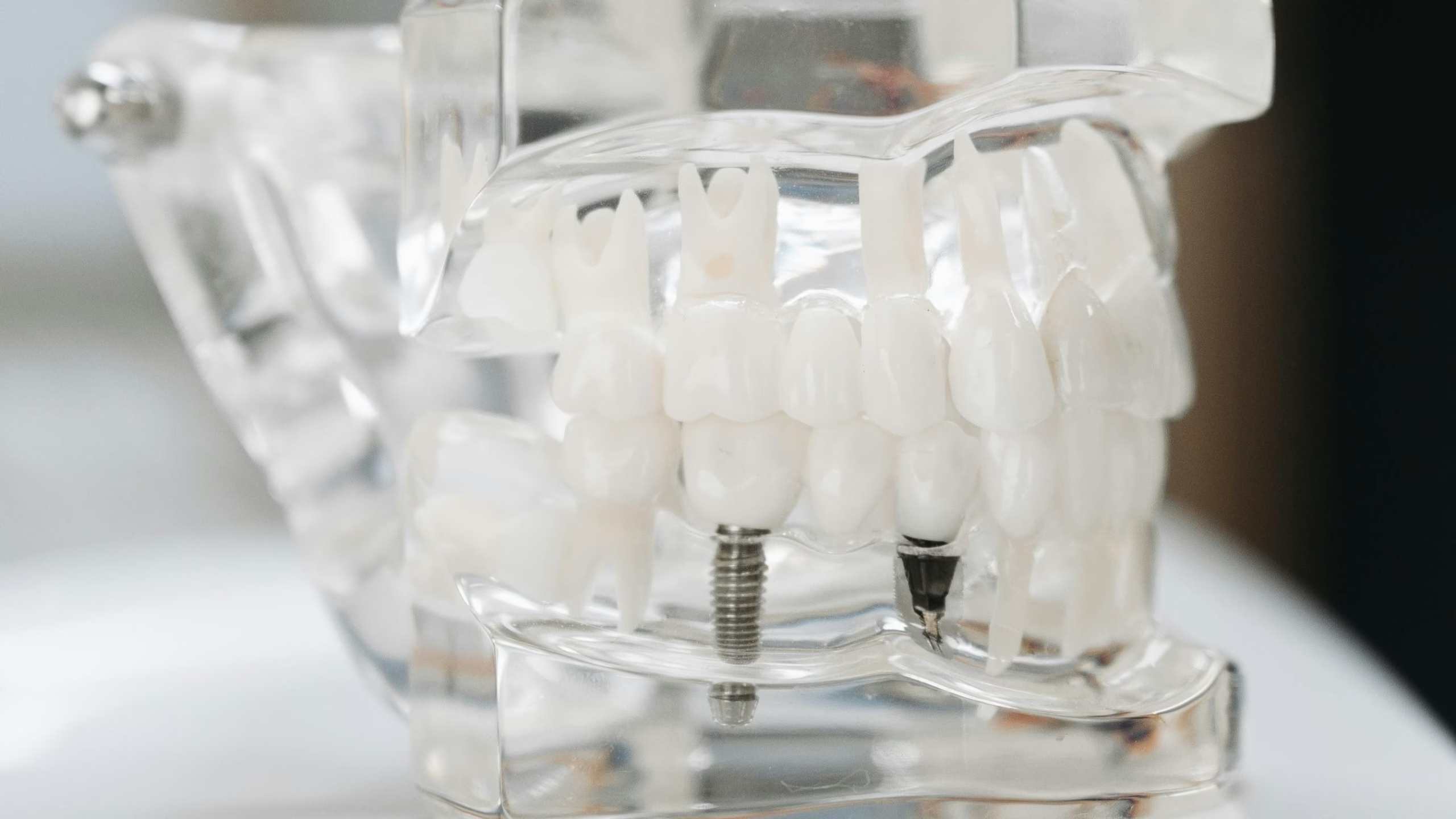
The implantation process is initiated by numbing the gum so it won’t hurt. An incision in the gum is made to reach the jawbone. Then a hole is drilled into the bone and titanium implant placed. The gum is sewn over the implant to heal.

Step 4: Healing and bonding

This is the most time-consuming section of the process. The implant must bond with the bone for a specific period of time referred to as osseointegration. This bonding holds the implant in place just as much as the natural tooth root. The healing time is usually just a few months, but patients can still live normally and develop simple care regimen from the dentist in the meantime.

Step 5: Fixing the abutment

The gum is again reopened after healing is complete to hold a small connector piece called an abutment in place. The abutment is placed on top of the implant and is the connector from crown to implant. In certain cases, the abutment is placed simultaneously with the implant, but in others, the abutment is placed following healing.

Step 6: Fitting the crown

The final process is to cement the crown that has been created to perfectly match the color, size, and shape of the original teeth. The crown is cemented to the abutment, and the process is completed. The new tooth is now exactly the same as the rest of the teeth in function and form.

Conclusion

Dental implants are a procedure that is time-consuming and multi-steps, but the reward is well worth it. They allow for chewing function, smiling, and eating without worrying about missing teeth. Being aware of what to anticipate step by step removes a great deal of apprehension.

To everyone considering this as an option, the top step is a visit to the dentist and seeking advice based on individual needs and health. An implant is not just a replacement tooth—it’s a restoration of comfort and confidence with day-to-day things.

Back-To-School Dental Checkups Made Easy

The school bag is packed. Uniforms are ironed. Lunchbox is ready. But when did you last look inside your child's mouth? Most parents forget this step. Classes begin, homework piles up, and somewhere between maths and lunch breaks, a small cavity turns into a painful...

Monsoon Gum Care in Pondicherry – Prevent Infections Now

During the monsoon, Pondicherry changes. Grey sky, consistent rainfall, and that all-encompassing scent of wet earth are the hallmarks of July through September. The level of humidity rises to 80 or even 90%. The temperature remains warm, ranging from 25 to 35...

Pondicherry’s Dental Tourism Wave: All You Need To Know

Picture this. You walk out of a dental clinic in Pondicherry with a new set of implants, hop into an auto, and fifteen minutes later you're watching the sunset by the rock beach. No rushing. No traffic jams. Just treatment done right and a quiet evening ahead. That's...

Diabetes Starts in the Mouth? Don’t Make This Mistake

When monitoring their blood sugar, most individuals don't consider this: your toothbrush may be just as crucial as your insulin. Doctors have known for years that diabetes affects nearly every part of your body. But the mouth? That connection still surprises people....

Teeth and Gums: The Powerful Partnership Behind a Confident Smile

Take a moment to imagine a door. Although the door is sturdy and sturdy, it is worthless without its hinges. They allow it to move while holding it in place. Your gums and teeth function similarly. The gums are the living support structure that keeps the teeth stable...

Black Teeth: Common Causes, Early Warning Signs & Urgent Care Tips

Seeing a dark tooth or a black spot in the mirror can be startling. It is a common worry, but in most cases, it is a problem that a dentist can solve. This is not just about how you look; sometimes it is a signal that something needs attention inside your mouth. Let...

Aligners Vs Bracers. Here’s How To Pick Your Ultimate Choice

Aligners Vs Bracers. Here's How To Pick Your Ultimate Choice There is more to a straight grin than just appearances. Teeth that are properly aligned are simpler to clean, chew more effectively, and put less pressure on the jaw. Braces and aligners are often the two...

Jaw Pain? Here Are 6 Highly Possible Reasons Why

Jaw Pain? Here Are 6 Highly Possible Reasons WhyJaw pain might be confusing. It might start off as a dull ache around the ear, pain when chewing, or feel tight when you open your mouth. Some people sense it as soon as they wake up, while others experience it after...

How to Reduce Gum Pain At Home

How To Reduce Gum Pain At HomeGum pain is one of those warning signs that people usually do not pay attention to until it gets to a point where it interferes with what you do on a daily basis. It can make eating unpleasant, brushing impossible and, sometimes the ache...

Types Of Teeth Caps And How To Take Care Of Them

Types Of Teeth Caps And How To Take Care Of ThemWhen a tooth is extremely damaged, cracked or is filled more than it is natural, a cap (also known as a crown) is one of the easiest ways to stabilize the teeth. A cap is designed to cover the entirety of the exposed...

Want to learn more?

Consult with our experts!